
Project 03 NovaRing

Data-Driven Marketing · Segmentation · Campaign Strategy · 2026

← All projects

Case Study · Data-Driven Marketing · Fictional Brand · AI-assisted visuals

From customer data to targeted campaigns.

Analysis of simulated customer and platform data, development of relevant segments and creation of two targeted campaign concepts for the fictional premium wearable brand NovaRing.

Focus Data-Driven Marketing
Key areas Segmentation · Targeting · KPIs
Role Analysis & Strategy
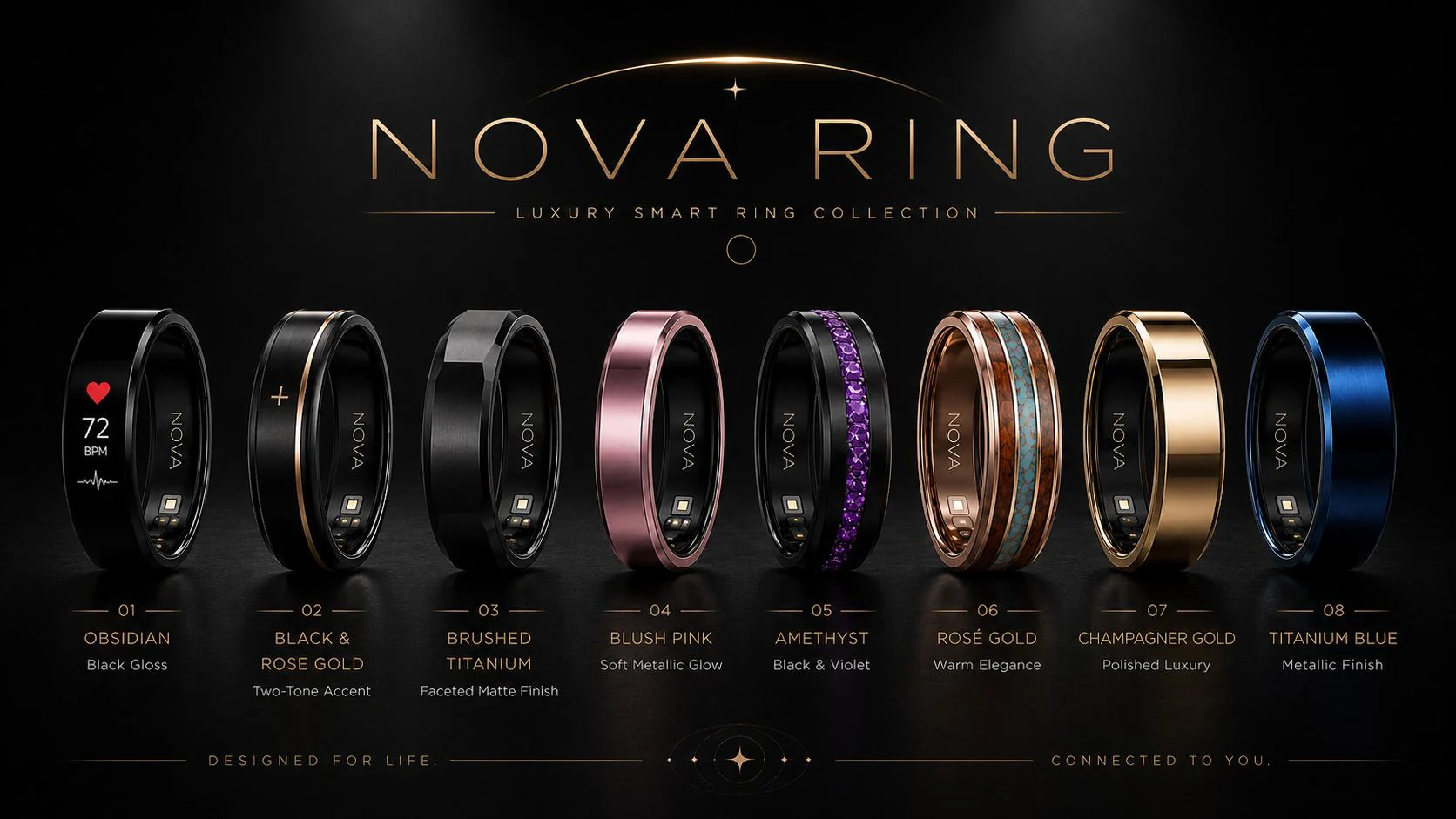
NovaRing collection with different smart-ring models
Project context

NovaRing is designed in this project as a new premium smart ring within a fictional Nova ecosystem. Existing customers already use other products or services from the brand and are therefore relevant for cross-selling. At the same time, NovaRing is intended to attract new customers interested in wearables, fitness and smart technology.

Which data points matter for the campaigns?

The basis was a simulated dataset with 500 customer contacts. What mattered was not only how many customers were in each group, but what the recency of their purchases could mean for a later campaign.

Purchase recency

How long ago was the last purchase?

83.2% active customer base
Very recent last purchase 0–10 days ago
115 23.0%
Current last purchase 11–29 days ago
150 30.0%
Active last purchase 30–89 days ago
151 30.2%
Inactive last purchase 90+ days ago
84 16.8%
What does this mean?

The first three groups contain a total of 416 customers. This means 83.2% of the analysed customer base is considered active and forms the most relevant basis for repeat purchases and cross-selling.

New customer potential

Which channels drive awareness?

69% Search + Meta
Google Search active product search and purchase intent
190 38%
Instagram / Meta Ads visual awareness and product discovery
155 31%
YouTube / Shorts demonstration and explanation
95 19%
Blog / SEO deeper information needs
60 12%
What does this mean?

Google Search and Instagram / Meta Ads account for 69% of the analysed new customer potential. Search captures existing demand, while social primarily supports awareness and product discovery.

Transparency

All customer and platform data shown were simulated as part of the training project. They do not represent real company or campaign results.

Two target groups with different requirements.

The analysis led to two prioritised target groups. Both are relevant to NovaRing, but differ clearly in readiness to buy, information needs and channel preferences.

01 Active existing customers

Use existing trust for cross-selling.

416 active customers
€481.40 average order value (AOV)
2.20 average purchases

These customers already know the Nova ecosystem, have built trust in the brand and can be reached directly using first-party customer data.

Strategic implication Email · Newsletter · Retargeting · Cross-Selling · Existing-customer benefits
02 Prospective customers interested in tech

Convert existing interest into first-time customers.

38% Google Search
69% Search + Meta

These users are already searching for smart rings, wearables, sleep tracking or fitness products. They need clear benefits, product understanding and a convincing introduction to the brand.

Strategic implication Search · Meta Ads · YouTube · Landing Page · Retargeting
Data Segment Need Channel Campaign

Turning segments into targeted campaigns.

For each target group, I developed a separate approach to channels, targeting, offers and measurement. This turns the segmentation into concrete campaign planning.

Campaign 01

Activate existing customers.

The existing customer relationship allows for much more direct communication. The focus is on repeat purchases and cross-selling within the Nova ecosystem.

Goal
Repeat purchases & Cross-Selling
Channels
E-Mail, Newsletter, Retargeting, Shop
Targeting
Behavioral, Customer Match, Device, Geo
Frequency
maximum two contacts per week
Campaign 02

Acquire new customers.

The initial focus is on awareness and product understanding. Search captures existing demand, while social and video make the product visible and build interest.

Goal
First purchases, reach, app interest
Channels
Search, Meta Ads, YouTube, Landing Page
Targeting
Keyword, Contextual, Behavioral, Device, Geo
Follow-up
Retargeting for visitors who did not purchase
Performance measurement

Repeat purchases

Cross-selling revenue

Email click-through rate

Conversion rate

First-time purchases

Cost per purchase

App installs

Ad click-through rate

How I would evaluate campaign performance.

Because the campaigns were not run live as part of the project, I deliberately do not present invented performance results. Instead, I defined which metrics could be used to evaluate future results and guide optimisation.

01 Targeting

Are the right users being reached?

02 Campaign

Do the message, channel and offer work?

03 KPI

Which activities actually drive a response?

04 Optimisation

Refine budget, targeting and communication.

Existing customers

Retention & Customer Value

  • Repeat purchases
  • Cross-selling revenue
  • Email click-through rate
  • Conversion rate
  • redeemed discount codes
New customers

Acquisition & Efficiency

  • First-time purchases
  • Landing page visits
  • Cost per purchase
  • App installs
  • Ad click-through rate
Next iteration

Launch campaigns → compare results by segment and channel → expand strong combinations → revise weak messages or targeting → measure again.

From data analysis to campaign logic.

For NovaRing, I analysed simulated data, prioritised target groups and developed different campaigns for existing and new customers. The focus was on segmentation, targeting and performance measurement.

01 Data analysis

Systematically analysed and interpreted simulated customer and platform data.

02 Segmentation

Identified and prioritised different customer opportunities.

03 Campaign strategy

Developed tailored communication and channel approaches for existing and new customers.

04 Targeting & KPIs

Defined targeting logic and relevant metrics for both campaigns.

Additional elements

Competitive Analysis

Target Audience Strategy

Customer Match

Retargeting

Conversion Logic

Visual Presentation